


Seven Hearts Stories
Sinomi Games
I went into Seven Hearts Stories expecting a straightforward collection of interactive novels, but its real appeal is more focused than that. The game is built around the experience of moving through story-led adventures, making choices, and deciding how much attention I want to give each chapter. It is not trying to replace a traditional action game. Instead, it gives me a quieter way to play, one where the main reward comes from following a narrative and seeing where it leads.
That makes it an interesting fit for players who enjoy adventure games but do not always want reflex-heavy combat, complicated controls, or a large open world. I can pick it up when I have a little time, read through a scene, and stop when the moment feels complete. At the same time, the mature 17+ rating is important. This is not a title I would casually hand to a younger player, and anyone who prefers completely light or family-friendly storytelling should look elsewhere.
Why the visual-novel format matters here
The key capability is the collection format. Rather than presenting one long adventure as the only reason to stay, Sinomi Games brings several visual-novel experiences together under one game. In practice, that changes how I approach it. I am not committing myself to a single type of story every time I open the app; I can explore the available narratives according to my mood and attention span.
That structure is especially useful on a phone. A traditional adventure game may ask me to remember a map, manage equipment, or spend time reaching the next major event. Here, the emphasis is on reading and following the decisions in front of me. The smaller mental load makes it easier to play during a quiet break, before bed, or while travelling, although I would still avoid starting an important scene when I know I will be interrupted.
The visual-novel approach also changes what “progress” means. In an action title, progress is often measured by levels cleared or enemies defeated. In this game, I am more interested in understanding a character, noticing how a decision changes the tone of a scene, and remembering the context of an earlier choice. That can feel more personal than simply collecting rewards, but it also means the experience depends heavily on whether I connect with the writing and presentation.
Related News

Threads in Real Life: Who Should Join, Lurk, or Leave

How SHEIN Turned Shopping Into an Endless Content Feed

How to Make Fortnite Feel Smarter on Mobile

Should You Switch to Microsoft Outlook on Mobile?

Why Gallery Keeps Pulling Users Back

X Review: Why Its Network Still Matters
I found the format most satisfying when I treated each story as something to read actively rather than something to rush through. Skimming dialogue may let me reach the next decision faster, but it removes much of the reason to play. The collection works best when I give the scenes enough attention to notice the difference between a choice made thoughtfully and one selected at random.
How I use the collection without losing track
When several stories are available, my first instinct is to open everything immediately. That is not always the best approach. I get more from the game when I choose one narrative and give it a proper session before jumping elsewhere. This keeps the characters and tensions fresh in my mind, which matters more in a story collection than it would in a set of unrelated arcade challenges.
A useful routine is to stop at a natural break rather than closing the game in the middle of a major decision. Even if the app allows me to return later, I find that the emotional context of a choice is easier to preserve when I pause after a scene has settled. This is a small habit, but it makes the collection feel less scattered.
Gallery
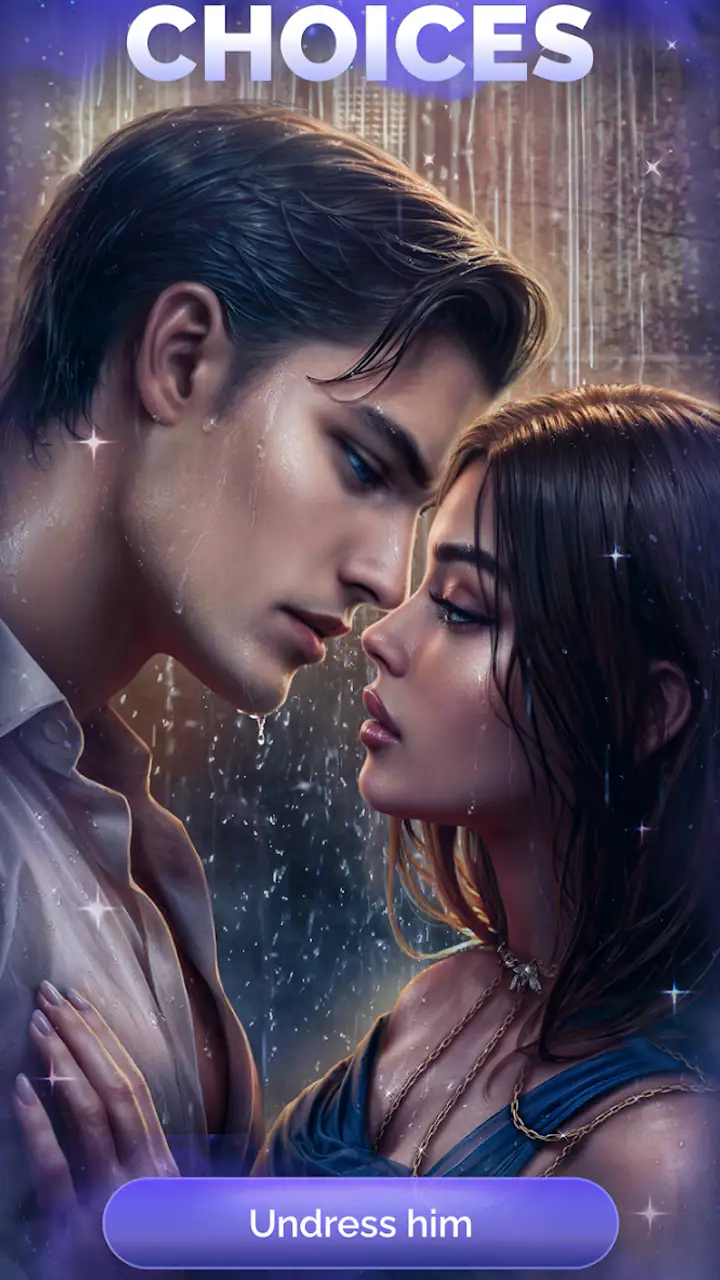
I also recommend reading the opening material carefully. Players who skip introductory text may understand the immediate button presses but miss the tone of a particular story. Since the game’s value is tied to its narratives, the first few scenes do more work than a tutorial would in a conventional adventure game. They establish what kind of attention the story expects from me.
Another practical point is to keep expectations realistic about replaying. A visual novel can invite me to revisit earlier decisions, but replaying only feels worthwhile if I am curious about the consequences or want to compare a different approach. If I treat every choice as a test I must optimize, the experience becomes less natural. I prefer making a decision that fits the moment, then replaying only when I genuinely want to explore another direction.
A realistic everyday way to play
My favorite use case is a short evening session when I want something more engaging than scrolling but less demanding than a full console game. I can open the app, continue a story, and spend a few minutes reading without needing to prepare a gaming setup. If I have more time, I can stay longer and let the narrative build. That flexibility is one of the strongest reasons to try it.
It also suits someone who enjoys discussing fictional choices with friends. After a scene, I may want to talk about whether a decision was sensible, selfish, or simply the least damaging option. That kind of conversation is different from comparing high scores. The game gives me material to think about, rather than only a result to beat.
On the other hand, I would not choose it for a commute where I expect constant interruptions. Reading a tense scene in small fragments can weaken its effect, and an unexpected phone call can make me forget why a decision mattered. The best environment is one where I can give the story a little uninterrupted attention, even if the session itself is not long.
It is also a good option for players who have grown tired of the usual mobile adventure formula. Many mobile games use exploration mainly as a path between reward screens or combat encounters. This collection places the narrative in the foreground. If I want a game that respects reading as the central activity, it offers a more suitable alternative than a typical action-adventure download.
Where the experience can become demanding
The same focus that makes the game distinctive can also limit its audience. If I need constant interaction, fast movement, or immediate feedback, a visual-novel collection may feel slow. The game asks me to be patient, and patience is not the same as passive enjoyment. I still need to follow what is happening, remember the people involved, and decide how I want to respond.
The mature rating creates another clear boundary. I would check that the intended player is comfortable with mature themes before recommending it. A free download can make a game look broadly accessible, but the age label tells me that the content is aimed at adults. Parents choosing something for a shared family device should take that seriously.
There is also a financial trade-off. The game is free to start, but optional purchases range from $1.99 to $114.99 per item. That wide range means I would approach the purchase screen carefully rather than assuming every part of the collection can be enjoyed without spending. Before buying anything, I would first decide whether I am enjoying the writing and whether the additional content is worth the cost for my own play habits.
My advice is to avoid spending simply because a story has created a moment of urgency. Narrative games are good at making a decision feel emotionally immediate. I prefer to close the purchase prompt, think about whether I actually want the content, and return later if the answer is still yes. That pause helps separate genuine interest from impulse.
The collection format can create a second kind of friction: not every story will appeal equally to every player. A player may connect strongly with one narrative and feel less interested in another. That is not necessarily a flaw, but it means the overall value depends on how much of the available material matches personal taste. Someone looking for one tightly controlled story with a single consistent tone may prefer a standalone visual novel instead.
How it compares with familiar alternatives
Compared with action adventures, this game is easier on my hands and more demanding of my attention. I do not need quick reactions, but I do need to read. Compared with puzzle adventures, it gives me fewer reasons to experiment with objects or systems and more reasons to consider the meaning of a choice. Compared with a book, it adds the feeling of participation, because I am not only receiving the plot; I am helping shape the path I take through it.
That middle ground is its strongest position. It is more interactive than ordinary reading and more relaxed than a conventional game. I would recommend it over an action title to someone who wants narrative without pressure. I would recommend a puzzle or exploration game instead to someone who needs a stronger sense of physical discovery.
It also differs from watching a series. A show controls the pace and sequence for me, while this format makes me pause and decide. That can create more involvement, but it can also make the experience less smooth. If I want to sit back and let a story play without making choices, television or a conventional video may be a better fit.
What the store figures suggest in context
Sinomi Games released the game on June 3, 2022, and the current version is 2.100.67. It has reached over 500 thousand installs and holds a 4.0 average from around 12 thousand ratings, with 114 written reviews. Those figures suggest that it has found a meaningful audience, while the rating also feels consistent with a title whose appeal will depend strongly on personal taste and tolerance for its mature storytelling.
The game is free, which makes trying the basic experience less intimidating, but the purchase range deserves attention before I recommend it without qualification. I would describe it as free to explore rather than automatically free in every respect. That distinction matters for anyone managing a tight budget or sharing a device with children.
On Android, it requires version 6.0 or later. That is helpful for players using older compatible phones, although the most important question is still whether the device and the player’s reading habits suit the experience. A supported operating system does not guarantee that every player will enjoy a story-first game.
Who gets the most from it
The best audience is someone who likes interactive fiction, character-focused adventures, and decisions that invite reflection. I would especially point it toward players who want a mobile game they can enjoy in calm sessions rather than one that constantly demands attention. Readers who already enjoy visual novels will understand the rhythm quickly, while newcomers should be willing to give the format time before deciding whether it works for them.
It can also suit adults looking for a more private, personal style of play. The mature rating means I would not frame it as a casual family game, but for the intended audience, the tone may be part of the reason the stories feel more serious. I would still suggest checking the content comfortably and choosing a setting where reading is appropriate.
I would skip it if my priority were competitive play, fast action, detailed character control, or a large world to explore freely. I would also skip it if I dislike making choices without knowing their consequences. The uncertainty is part of the appeal, but it can frustrate players who want a clearly optimal route every time.
One of the more useful ways to approach it is as a sampler. Instead of assuming every story must become a long-term commitment, I can use the collection to discover which kind of visual novel holds my attention. That makes the game more approachable than a single expensive purchase, although the in-app pricing still means I should be selective about what I unlock or continue.
My recommendation after spending time with it
Seven Hearts Stories is worth trying when the story itself is the reason you play. Its collection format gives mobile players a convenient way to move between visual-novel adventures, and its strongest moments come from slowing down, reading carefully, and treating choices as part of the experience rather than obstacles between rewards.
I appreciate that it occupies a clear space between books and conventional games. It offers participation without demanding action-game reflexes, but it is not effortless entertainment. The mature age rating, optional purchases, uneven personal connection between stories, and slower pace all matter when deciding whether it belongs on your phone.
For me, the most sensible recommendation is to start cautiously: try the free experience, focus on one story at a time, and avoid making purchases until I know that the writing and format genuinely hold my attention. Players who enjoy that approach may find a thoughtful adventure collection here. Players who need constant movement or a family-friendly game should choose something else.
Sinomi Games has made a game for a specific kind of player rather than trying to satisfy every mobile audience. That focus is a strength. When I want a quiet, choice-driven adventure and have enough time to read properly, the collection gives me a reason to return. When I want immediate action, it is simply the wrong tool—and knowing that makes the recommendation much more honest.
FAQs for Seven Hearts Stories
What is Seven Hearts Stories about?
Seven Hearts Stories is an interactive story game where you follow romantic, dramatic, and fantasy-inspired narratives through dialogue choices. You guide the main character’s relationships and decisions, and your selections can influence conversations, romance routes, and later events. The app is designed for players who enjoy visual-novel storytelling, character development, and episodic adventures rather than traditional action gameplay.
Is Seven Hearts Stories free to download and play?
Seven Hearts Stories can generally be downloaded for free, but some content may be supported by optional in-app purchases. Depending on the version and platform, premium choices, special scenes, energy, tickets, or additional story chapters may require payment. Players who prefer not to spend money can usually access part of the experience by progressing gradually, watching available advertisements, or waiting for resources to replenish.
Does the game require an internet connection?
An internet connection may be necessary for downloading story content, synchronizing progress, displaying advertisements, processing purchases, and receiving updates. Although some previously loaded scenes might remain accessible temporarily, the game should not be considered fully offline. A stable Wi-Fi or mobile-data connection is recommended, especially when starting the app for the first time or moving between chapters.
Do choices affect the story and relationships?
Yes, choices are an important part of Seven Hearts Stories. Dialogue and action selections can change how characters respond to the protagonist, influence relationship levels, and unlock different conversations or scenes. Some decisions may also lead to alternate outcomes or romance routes. Players who want to explore every possibility may need multiple playthroughs, saved progress, or a guide for difficult decisions.
Is Seven Hearts Stories suitable for all ages?
The game’s suitability depends on its current story content, themes, and the player’s age. Because interactive romance games can include emotional conflict, mature dialogue, suggestive situations, or dramatic relationship topics, parents should check the official age rating and review the store description before allowing younger players to download it. The rating and available content may also vary between Android and iOS versions.
Pros
- Branching choices make each story feel personal and replayable.
- Romance routes offer varied personalities and relationship dynamics.
- Frequent story updates provide new chapters to explore.
- The interface is simple
- colorful
- and easy to navigate.
- Episodes can be enjoyed in short sessions on mobile.
Cons
- Some premium choices may be costly for free-to-play users.
- Energy or ticket systems can slow progress between chapters.
- Story quality may vary depending on the route you choose.
- The app may require a stable connection to load episodes.
- Ads or waiting periods can interrupt the reading experience.


